
Introduction
The Gaza Strip, a narrow piece of land situated along the eastern Mediterranean and bordered by Israel and Egypt, has long been emblematic of protracted conflict and humanitarian crisis. The roots of this struggle extend far into history. The modern conflict can be traced back to the events of 1948—the Nakba—when the establishment of the State of Israel led to the displacement of hundreds of thousands of Palestinians. In that seminal year, Zionist militias and the Israeli army succeeded in seizing vast swathes of territory, resulting in the mass exodus and dispossession of Palestinians who would later populate the densely settled Gaza Strip.
Over the subsequent decades, Gaza has experienced successive episodes of military occupation and recurring warfare. Following Egypt’s administration after 1948 and a brief period of Israeli occupation during the 1956 Suez Crisis, the situation escalated after the Six-Day War of 1967. Israel’s capture of Gaza in 1967 marked the beginning of a long-term military occupation that set the stage for decades of economic hardship, social disenfranchisement, and recurring armed confrontations. The Palestinian struggle for self-determination gained further complexity with the rise of the First Intifada in 1987, a popular uprising that underscored the resilience of the Palestinian people against a prolonged state of oppression.
The peace process that began with the Oslo Accords in the early 1990s promised limited autonomy for Palestinians and raised hopes of a negotiated resolution. However, disillusionment with the Palestinian Authority’s performance, coupled with ongoing Israeli settlement expansion and intermittent military strikes, paved the way for the ascendancy of Hamas. In 2007, after a brief but bloody intra-Palestinian struggle, Hamas took full control of the Gaza Strip, triggering a severe blockade imposed by Israel and supported by Egypt. This blockade has not only stifled Gaza’s economy but has also severely restricted the flow of goods, including essential medical supplies, food, and construction materials.
Fast forward to October 2023: a catastrophic escalation occurred when Hamas launched a surprise attack on Israel. In response, Israel initiated a massive disproportionate military operation in Gaza, a campaign characterized by relentless airstrikes, artillery bombardments, and, at times, ground incursions. The ensuing violence rapidly transformed Gaza into a war zone, where civilian casualties mounted, humanitarian infrastructure crumbled, and basic services nearly collapsed. As one correspondence poignantly stated, “An unbearable human tragedy is taking place in Gaza. In the fifth month of the war, 30,631 Palestinians have been killed”, and counting.

International bodies and human rights organizations have repeatedly raised alarms. The International Court of Justice (ICJ) issued provisional measures in January 2024, instructing Israel to take urgent steps to prevent further genocide against Palestinians, while UN Security Council resolutions calling for ceasefire have been repeatedly vetoed. The situation escalated into an all-encompassing humanitarian crisis with regional and even global reverberations.
The current war, one in many, marked by extraordinary levels of violence and suffering, demands a comprehensive examination of its multifaceted impacts on the health, education, and future prospects of the people in Gaza.
This brief review of literature examines the health, environmental, and educational effects of the war in Gaza, aiming to highlight the ongoing crisis. Most of the evidence here relies on personal accounts and reports, as there are few formal studies analyzing the scale of death and destruction. We hope this summary sparks a broader effort to systematically document and study the realities faced by people in Gaza.
Health Impact and Death Tolls According to Research – Direct and Indirect Casualties: Unprecedented Mortality Rates
The human cost of the war on Gaza is staggering. Various research studies and independent analyses have consistently highlighted the catastrophic impact of the ongoing violence on public health. According to recent estimates based on a three-list capture-recapture analysis, traumatic injury mortality in the Gaza Strip between October 7, 2023, and June 30, 2024, reached approximately 64,260 deaths, with a 95% confidence interval ranging between 55,298 and 78,525. This estimate indicates that the official figures provided by the Palestinian Ministry of Health (MoH) may under-report the true scale of casualties by as much as 41%.
In one particularly harrowing correspondence, it was noted that by the fifth month of the war (February 2024), over 30,631 Palestinians had been killed and more than 72,000 injured. These figures reflect only the tip of the iceberg, as many experts believe that the actual death toll could be significantly higher when accounting for indirect deaths. Indirect deaths—those resulting not from immediate violence but from the collapse of health systems, malnutrition, communicable diseases, and the breakdown of sanitation services—are expected to be even more devastating. Some estimates suggest that for every direct death, there may be as many as four indirect deaths, potentially pushing the overall death toll to upward of 186,000, which would represent nearly 8% of the total population of Gaza. All these estimates are unfortunately not up to date, and with ongoing fights and airstrikes it is probable that numbers go up.
Demographic Breakdown and Vulnerable Populations
The distribution of casualties paints a grim picture, particularly for vulnerable groups. Women, children, and older adults constitute a disproportionately large share of the victims. In the mortality study mentioned earlier, these groups accounted for 59.1% of the documented deaths. Among these, children have borne an especially heavy burden. For instance, in one account, it was reported that at least 10,000 children had been killed by January 2024, with additional losses occurring among Palestinian children in the West Bank and even among those abducted during the conflict.
The physical injuries sustained range from traumatic burns and lacerations to injuries resulting from structural collapse. Survivors of such injuries often face long-term disabilities, chronic pain, and debilitating conditions that further strain an already overwhelmed healthcare system. The collapse of medical infrastructure in Gaza has exacerbated these issues: hospitals are inundated, many healthcare facilities have been rendered non-functional, and even basic emergency services are in short supply. Reports indicate that over 1,000 attacks on healthcare facilities have been documented, leaving hospitals and primary healthcare centers barely operational.
Breakdown of Healthcare Infrastructure and Systemic Collapse
The war’s impact on healthcare goes beyond the immediate casualties. The destruction of critical infrastructure has led to a systemic collapse in the delivery of healthcare services. Only a handful of hospitals remain functional, and many of the remaining facilities are operating under conditions of extreme duress. This collapse has had a ripple effect across all sectors of health: the supply chain for essential medications has been disrupted, routine immunizations have been halted, and chronic disease management programs have been severely compromised.
Moreover, communication blackouts and the destruction of transportation networks have made it extremely difficult for first responders to reach those in need. For example, the inability to transport critically ill patients or to provide timely surgical interventions has undoubtedly contributed to higher mortality rates from conditions that would otherwise be treatable. In some instances, the lack of electricity and fuel—exacerbated by Israel’s policy of a “complete siege”—has forced hospitals to operate with emergency generators, further limiting their capacity to provide adequate care.
Mental Health and Long-Term Consequences
While the immediate physical toll of the conflict is devastating, the long-term mental health consequences are equally alarming. Prolonged exposure to violence, displacement, and the constant threat of death have led to widespread psychological trauma. Studies have shown that over 1 million Palestinian children are now in dire need of mental health and psychosocial support. The chronic stress associated with such prolonged conflict is likely to result in an increased prevalence of post-traumatic stress disorder (PTSD), anxiety, and depression across all age groups.
The adverse psychological effects extend into adulthood, as survivors are left with deep-seated trauma that impairs their ability to function in daily life and to participate in the socio-economic recovery of their communities. Given the scale of the crisis, experts warn that the mental health implications of the war on Gaza will persist for generations, further compounding the humanitarian disaster.
Impact on Education and Research
Destruction of Educational Infrastructure
The educational system in Gaza has not been spared, unsurprisingly, from the ravages of war. The conflict has decimated schools, universities, and other centers of learning, creating a crisis that threatens to rob an entire generation of their future. According to recent reports, more than 80% of schools in Gaza have been damaged or destroyed, and at least 625,000 students now lack access to education. The physical destruction is staggering: over 5,479 students, 261 teachers, and 95 university professors have been killed in Gaza, and many more have been injured or displaced.
In one particularly illustrative example, the demolition of Israa University—the last remaining higher education institution in Gaza—on January 17, 2024, signified not just the loss of a building, but the obliteration of a vital center of intellectual life and research. The systematic targeting of educational institutions has been described by UN experts as “scholasticide,” a deliberate attempt to erase the pillars of knowledge and hope from Palestinian society.
Impact on Students and Teachers
The consequences for students are profound. With schools turning into rubble or being repurposed as shelters, children are not only deprived of formal education but are also subjected to environments that exacerbate trauma. The lack of safe learning spaces has forced many families to seek informal education in makeshift setups, which offer little in the way of quality instruction or psychological support. The loss of educational infrastructure undermines not only immediate learning but also the long-term development of the human capital essential for future recovery.
Teachers, too, face enormous challenges. Many educators have been killed or injured, and those who survive are often forced to work under perilous conditions, sometimes in schools that double as emergency shelters. The toll on teachers is compounded by a severe shortage of resources and a lack of support for trauma-informed education. With many teachers themselves traumatized by the violence, the capacity to deliver effective education is severely diminished. Furthermore, the destruction of cultural heritage sites—including libraries and archival centers—represents a loss of historical memory and identity for the Palestinian people.
The Erosion of Research Capacity
The impact of war on Gaza extends into the realm of scientific research. Academic institutions and research centers, which once served as hubs for innovation and development, have been crippled by the conflict. Researchers now face myriad challenges: unreliable electricity, disrupted internet connectivity, and the constant threat of violence make it nearly impossible to conduct advanced scientific studies. For instance, computer scientists and researchers in fields such as water-borne diseases are forced to rely on makeshift solutions like solar-powered charging stations and improvised laboratory setups. The collapse of research infrastructure not only stymies the progress of current projects but also jeopardizes the future of Gaza’s academic and scientific community.
Personal accounts from within Gaza underscore the resilience of the research community. Some researchers have continued their work despite dire circumstances, balancing basic survival tasks with academic research. Their determination to document the effects of conflict on public health, environmental conditions, and educational outcomes is a testament to the indomitable spirit of Gaza’s intellectuals. However, the ongoing war has forced many talented researchers to abandon their projects or flee the region, resulting in a significant brain drain that will have lasting repercussions on the capacity for innovation and self-reliance in the future.
Broader Societal Impacts
The collapse of the education and research sectors in Gaza has far-reaching societal consequences. Education is not merely a pathway to economic development; it is also a cornerstone of social identity and cultural continuity. The systematic destruction of schools and universities is, in effect, an attack on the very future of the Palestinian people. Without education, young Palestinians face a grim outlook marked by unemployment, poverty, and continued vulnerability to political manipulation and violence.
Moreover, the loss of research capacity hinders the development of evidence-based policies that are crucial for rebuilding post-conflict society. In the absence of robust academic institutions, Palestine will struggle to generate the data needed to inform reconstruction efforts, public health interventions, and environmental remediation projects. This vicious cycle of destruction and neglect threatens to trap Gaza in a state of perpetual crisis, undermining hopes for long-term recovery and stability.
What Needs to Be Done: Recommendations and the Way Forward
Immediate Humanitarian and Ceasefire Measures
Given the scale of the humanitarian catastrophe unfolding in Gaza, immediate action is imperative. The first priority must be to secure an immediate and permanent ceasefire. As has been repeatedly emphasized, any prolongation of the conflict only compounds the suffering of civilians, with the potential for indirect death tolls to far exceed the already astronomical figures recorded to date.
In parallel with efforts to negotiate a ceasefire, it is critical to ensure unrestricted humanitarian access to the affected regions. Israel’s “complete siege” has not only starved Gaza of essential supplies but has also crippled its ability to rebuild. Immediate measures should include:
- Lifting the blockade to allow for the unhindered flow of food, water, fuel, and medical supplies.
- Guaranteeing safe passage for humanitarian convoys and medical evacuations.
- Implementing international monitoring to ensure that aid reaches those in need and that any restrictions are promptly lifted.
- These actions are not only vital for addressing the current crisis but are also essential for preventing further deterioration of public health and the collapse of essential services.
Rebuilding Healthcare Infrastructure
The destruction of Gaza’s healthcare infrastructure is a major contributor to the staggering mortality and morbidity rates observed during the conflict. To address this, researchers and scholars suggest a comprehensive plan for the reconstruction of healthcare facilities is urgently needed. This plan should include:
- Rebuilding hospitals and primary healthcare centers, with a focus on restoring functional capacities to treat both traumatic injuries and chronic diseases.
- Restoring the supply chains for essential medications, vaccines, and medical equipment.
- Investing in alternative energy sources, such as solar power, to ensure that rebuilt facilities have a reliable and sustainable source of electricity.
- Training and support programs for healthcare workers to manage both immediate trauma cases and long-term health conditions, including mental health disorders.
Reconstruction of the healthcare sector must be coupled with international accountability measures. Investigations into the targeting of healthcare facilities should be prioritized, and perpetrators of war crimes must be held accountable through international legal frameworks such as those established by the ICC and ICJ.
Revitalizing Education and Research
One of the most profound long-term impacts of the war on Gaza is the decimation of its education system. Restoring education is not only a humanitarian imperative but also a crucial investment in the future of the region. The following measures are suggested by multiple reports on the subject:
- Immediate Restoration of Safe Learning Spaces: To address urgent educational needs, temporary learning centers should be established in shelters and safe zones across Gaza. These spaces must prioritize trauma-informed psychosocial support for students and teachers, helping them cope with the psychological impacts of conflict. Ensuring access to basic education for all children is critical, even as permanent school infrastructure remains destroyed or inaccessible.
- Reconstruction of Educational Infrastructure: Rebuilding schools, universities, and cultural institutions like libraries and archival centers requires dedicated international funding. Priority should be given to restoring facilities that have historically served as intellectual and cultural hubs. Reconstruction efforts must also integrate inclusive curricula that acknowledge the realities of conflict, promote peacebuilding, and nurture resilience among students.
- Support for the Research Community: Gazan researchers need grants and funding to resume their work, alongside remote collaboration platforms to connect with global peers. Investing in reliable digital infrastructure—such as solar-powered internet systems—is essential to sustain academic progress amid local disruptions. The deliberate destruction of educational systems not only denies Palestinians their right to education but also erases the knowledge base vital for societal recovery. Rebuilding education is both a moral obligation and a cornerstone for long-term peace and development.
Economic and Environmental Rehabilitation
Beyond the immediate human suffering, the war on Gaza has inflicted irreparable damage on the region’s economic and environmental foundations. With 90% of the population displaced and nearly 70% of critical infrastructure destroyed, the economic collapse is both severe and deeply intertwined with the humanitarian crisis.
Targeted economic assistance programs must restore livelihoods, support small businesses, and create jobs, while critical infrastructure like roads, marketplaces, and industrial zones is rebuilt to revive economic activity. Simultaneously, environmental remediation efforts must clear hazardous debris, decontaminate groundwater, and restore sanitation systems, followed by constructing resilient housing and community centers to withstand future challenges.
Conclusion: A Call to End the War on Gaza
The war on Gaza represents a profound humanitarian crisis, rooted in decades of conflict and occupation, with the recent escalation since October 2023 causing unprecedented devastation. Hundreds of thousands direct deaths and countless indirect casualties have been reported, disproportionately affecting women, children, and the elderly. Critical infrastructure, including healthcare and education systems, has collapsed, erasing the foundations of society and leaving the population in extreme vulnerability.
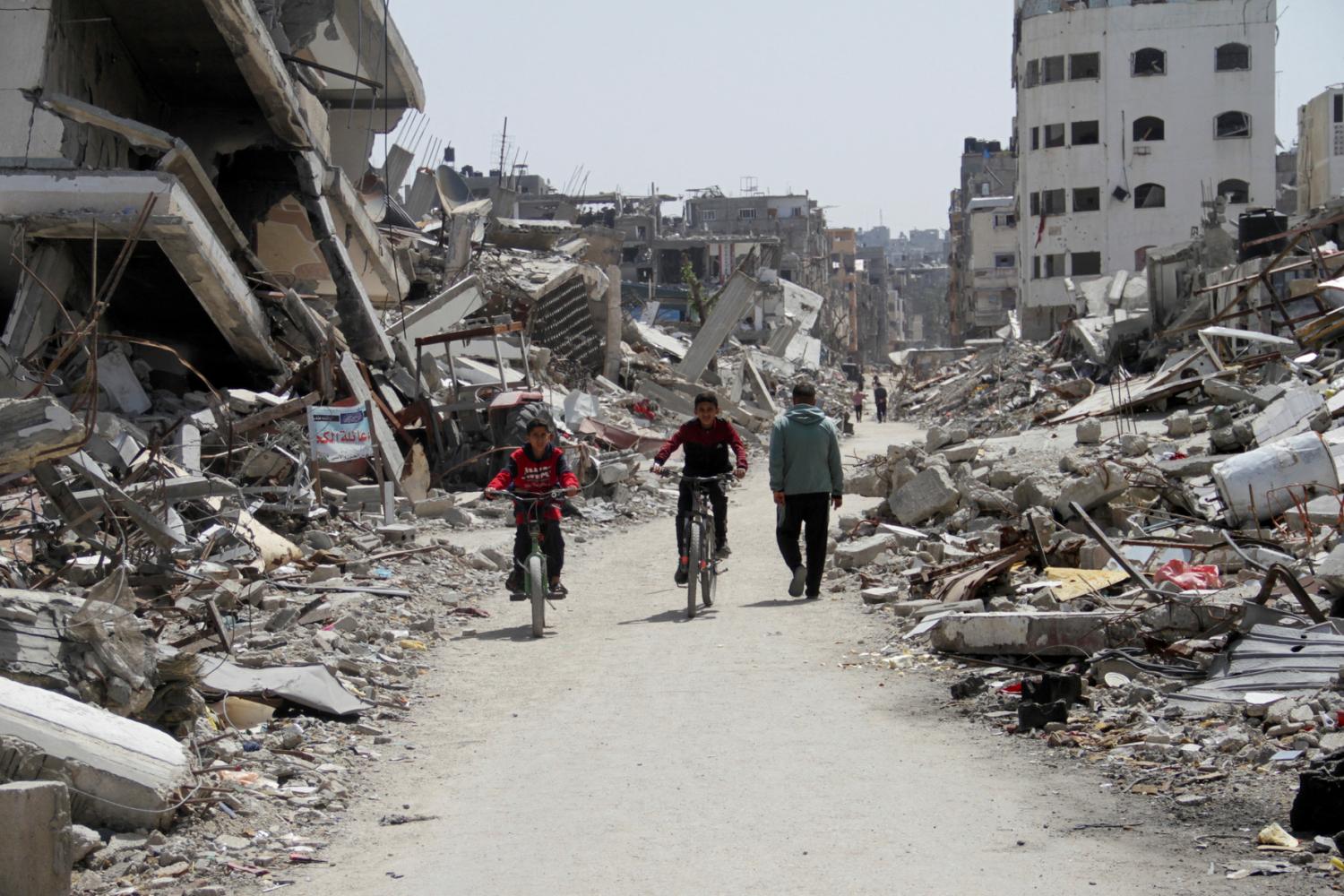
Despite immense suffering, Gaza’s civilians exhibit remarkable resilience, with educators, healthcare workers, and researchers striving to sustain hope. Immediate action—an unconditional ceasefire, humanitarian aid, and infrastructure reconstruction—is vital, alongside international accountability for war crimes. Mental health support must address widespread trauma, while long-term strategies integrating relief, justice, and sustainable development are essential to prevent recurring cycles of violence and ensure a future defined by peace rather than despair.
References:
- Yaqub S, Edwin B, Hammoud Z, et al. Gaza War: Too many citizens being killed. Br J Surg. 2024;111(4):znae094. doi:10.1093/bjs/znae094
- UN experts deeply concerned over ‘scholasticide’ in Gaza. OHCHR. Accessed March 18, 2025. https://www.ohchr.org/en/press-releases/2024/04/un-experts-deeply-concerned-over-scholasticide-gaza
- Steenberghe R van. The armed conflict in Gaza, and its complexity under international law: Jus ad bellum, jus in bello, and international justice. Leiden J Int Law. 2024;37(4):983-1017. doi:10.1017/S0922156524000220
- Khatib R, McKee M, Yusuf S. Counting the dead in Gaza: difficult but essential. The Lancet. 2024;404(10449):237-238. doi:10.1016/S0140-6736(24)01169-3
- 300 Days of War: Health Crisis in the occupied Palestinian territory. Accessed March 19, 2025. https://healthcluster.who.int/newsroom/news/item/08-08-2024-300-days-of-war-health-crisis-in-the-occupied-palestinian-territory
- The Israel-Gaza war and international diplomacy: multiple efforts, in random order. Aspenia Online. March 5, 2024. Accessed March 19, 2025. https://aspeniaonline.it/the-israel-gaza-war-and-international-diplomacy-multiple-efforts-in-random-order/
- UCL. Analysis: Israel-Hamas war: six key moments for the Gaza Strip. UCL News. October 26, 2023. Accessed March 19, 2025. https://www.ucl.ac.uk/news/2023/oct/analysis-israel-hamas-war-six-key-moments-gaza-strip
- Stamatopoulou-Robbins S. The Human Toll: Indirect Deaths from War in Gaza and the West Bank, October 7, 2023 Forward. Brown University’s Watson Institute for International and Public Affairs; 2024:25. https://watson.brown.edu/costsofwar/files/cow/imce/papers/2023/2024/Costs%20of%20War_Human%20Toll%20Since%20Oct%207.pdf
- Boukari Y, Kadir A, Waterston T, et al. Gaza, armed conflict and child health. BMJ Paediatr Open. 2024;8(1):e002407. doi:10.1136/bmjpo-2023-002407
- Boisen C. Israel’s Punitive War on Palestinians in Gaza. J Genocide Res. Published online September 26, 2024:1-22. doi:10.1080/14623528.2024.2406098
- Catanzaro M. These Gaza scientists are keeping research alive amid war, destruction and uncertainty. Nature. 2025;638(8051):587-588. doi:10.1038/d41586-025-00160-w
- Göçek FM. Historicizing the Gaza War Through Collective Violence | GJIA. Georgetown Journal of International Affairs. October 3, 2024. Accessed March 19, 2025. https://gjia.georgetown.edu/2024/10/03/historicizing-the-gaza-war-through-the-use-of-collective-violence/
- Dannenbaum T, Dill J. International Law in Gaza: Belligerent Intent and Provisional Measures. SSRN Electron J. Published online 2024. doi:10.2139/ssrn.4978205
- Di Maio M, Leone Sciabolazza V. Conflict exposure and health: Evidence from the Gaza Strip. Health Econ. 2021;30(9):2287-2295. doi:10.1002/hec.4364
Disclosure: parts of this review was written with the help of AI software(s)
 MEJMMS
Leave a comment